
Trafigura ignites SAF deal with Syzygy
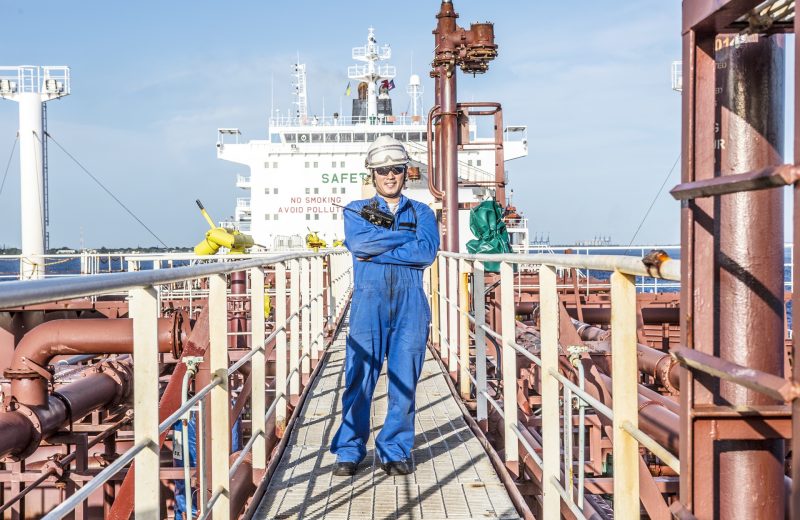
Grand Bahama, 2014
Commodities traders are essentially matchmakers. They make sure coffee grown in Brazil can find a mug in Berlin and fuel refined in Saudi Arabia can be pumped into a car in Switzerland. Without them, this would be tricky to manage.
Trafigura, one of the world’s largest physical commodity trading groups, does this every day. The company trades more than 7m barrels of oil every 24 hours, plus metals and other commodities. It operates in more than 150 countries around the world with a network of logistics infrastructure to store and deliver commodities.
The company has an expanding biofuels desk, which includes sustainable aviation fuel (SAF) for airplanes. The trader has signed a binding six-year offtake agreement with Syzygy Plasmonics for its Uruguay site to deliver SAF through their network. For Trafigura, the decision to secure future SAF deliveries was driven by consumer demand – especially in Europe where mandates make supply necessary.
“We’re active in these markets today and we see the advanced SAF sub-mandates coming in the UK and EU,” Jason Breslaw, head of low carbon fuels business development at Trafigura tells SAF Investor. “Our customers tell us they’re genuinely concerned about whether enough of these [SAF] molecules will come to market for them to receive physical supplies.”
Breslaw says he has looked at more than 50 SAF projects and what attracted him to Syzygy was the economic competitiveness of the novel non-HEFA based production pathway. Syzygy’s Uruguay plant is scheduled to launch in 2028. The site is planned to be the world’s largest biogas-to-SAF facility, producing 360,000 gallons of SAF per annum powered by renewable energy and sourced from low-carbon dairy gas.
“With Syzygy specifically, a few things stood out. They were able to demonstrate in-principle eligibility for certification across two categories of advanced SAF sub-mandate in the UK – specifically the non-HEFA advanced bio-SAF category and the eSAF/RFNBO category, as advised by a reputable independent third-party study. That was an important threshold,” Breslaw says.
In terms of structuring the deal with Syzygy, Breslaw says he understands the impact this commitment, in the form of an offtake, would have on de-risking the new technology being pioneered by Syzygy.
“The term length is about providing enough support for them to raise project finance – demonstrating to lenders that they can service the investment. A one-year commitment wouldn’t have achieved that. Six years was the right balance for both companies,” Breslaw adds.
Trevor Best, CEO of Syzygy Plasmonics agrees. “Strong offtake is undoubtedly the most critical element in getting a project financed,” he tells us. “To get this offtake it was necessary for Syzygy to understand Trafigura’s needs and craft a compelling offering. This includes having the right price, carbon intensity and pathway to getting the necessary certifications for our SAF to be applied against different mandates.”
Trafigura plans to sell this SAF in markets with mandates – especially the UK and the EU. But the firm stressed that its SAF offering is not exclusive to these two markets and they are looking at other regions and producers.
“A number of other countries have mandates, targets, or goals being pursued in different ways – all trying to build a SAF market while managing the cost to the end consumer,” he says. “But today, that [EU/UK] is the direction of travel I foresee, and we are preparing accordingly.”
Breslaw is also clear that their agreement with Syzygy is not exclusive: “It’s an ‘and’ not an ‘or’. We’re a large trading company and we don’t have to choose just one counterparty.” He says they have looked at multiple opportunities. “Some aren’t a good fit for a range of reasons and that’s fine. We look more closely at whether there’s a good commercial deal to be done and whether the risk profile merits it,” he adds.
Best says, with this endorsement from Trafigura for their offering, they are also pursuing other opportunities. “While our main focus is to supply SAF against the mandates in the EU/UK, Syzygy is also interested in multiple different regions globally,” he says.
“Our technology is capable of enabling the use of stranded biogas feedstocks, which in turn gives countries around the world a new pathway for the domestic production of SAF that can be used to meet their mandates.”
Ultimately, demand will dictate where SAF molecules will flow but there will always be a broker greasing the wheel between producers and buyers, making sure SAF reaches the right plane at the right price.
Subscribe to our free newsletter
For more opinions from SAF Investor, subscribe to our email newsletter.