
Why flexibility is your friend for unmitigated risks
Flexibility is a key watchword in modern life. Working from home, flexible office hours and yoga all highlight the benefits of ditching a rigid approach in favour of staying open to new opportunities.
It is also a major asset in a sustainable aviation fuel (SAF) producer’s tool belt to hedge against unmitigated project risks.
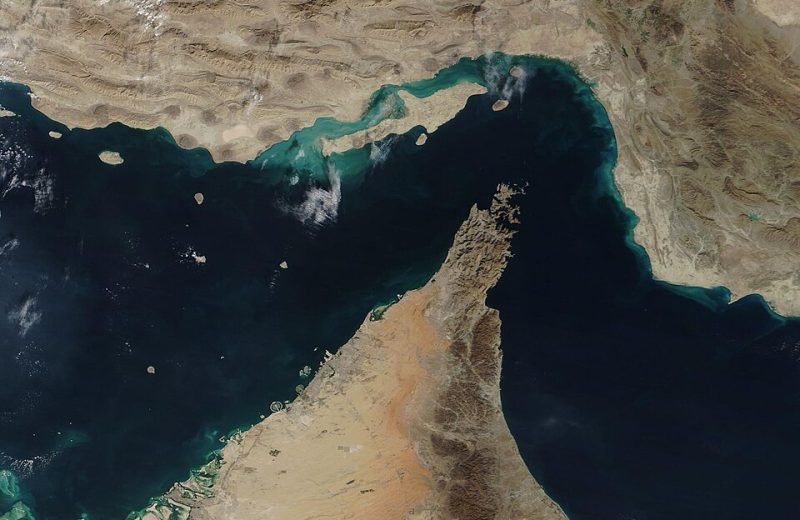
The conflict in the Middle East affecting the Strait of Hormuz has brought this type of risk into sharp focus. They can be economic shocks, like the ones we are seeing with oil prices, cultural shifts, political interference and natural events.
“There are the risks that cannot be mitigated by the project company, the sponsor, the lender or any of the parties that there are in building a project [geopolitical risks]. Some risks that are exogenous in nature that are unpredictable,” Shubhda Kaushik, MD and CEO, Alternative Energy Company tells SAF Investor.
Understanding how global events like this affect the risk profile for investors is now more critical than ever.
“SAF is such a global play. There is no way that you can ignore the geopolitical risk or underplay it,” adds Kaushik.
Geopolitical risk is always a key project aspect financiers consider during due diligence but this has moved further up the priority list over the past 10 years, Kaushik explains.
The events in the Strait of Hormuz have not all of a sudden turned everyone on to unmitigated geopolitical risk but they have “drawn it into focus”, agrees Jonathan Wood, chief commercial officer, Nova Pangaea Technologies.
The UK-based technology developer converts biomass to SAF, and co-product, biochar, and part of the Project Speedbird facility in Teesside, UK.
The challenge is how can you mitigate a risk that is largely out of your control?
There are a few tools at the producer’s disposal.
The first is in the strategic narrative: Effectively portraying the problem(s) that are trying to be solved. This has been seen with the energy security argument.
“We are trying to solve X [sustainability] and that’s why we are doing this, but if it is also solving Y [energy security], what’s the harm? So I think we are solving more problems than one at this point,” says Kaushik.
Wood tells us that the supply resilience argument is certainly on a par with the sustainability argument when it comes to SAF.
Another tool in a project developer’s belt is technological flexibility.
The ability to flip between multiple products and end markets can protect revenue streams. In the case of Nova Pangaea Technologies, the company can switch its production from SAF to road fuel or biochemicals, and it has the revenue from the biochar co-product and carbon removal credits.
“The capability to switch markets, if needed, is essential so you don’t end up with a stranded asset,” stresses Wood.
A stranded asset is a worst-case result for an investor.
This also applies to feedstock supply. Biofuel, and especially eSAF, feedstocks are considerably more localised than HEFA or the oil markets.
“Rather than sourcing supply from the same 10-15 oil-producing countries, SAF, and biomass especially, has the potential to generate a more balanced supply chain, sourced from different markets,” says Wood.
This certainly lessens global supply chain reliance, but Wood also expresses caution over pretending that, in the UK’s case, all feedstock can be sourced domestically. There is still a need for a sophisticated supply chain, there is just an opportunity for increased diversification away from traditional supply channels.
Knowing and planning for an unknown risk sounds exhausting. But a project structured with flexibility is critical to success in an ever-changing world.
Subscribe to our free newsletter
For more opinions from SAF Investor, subscribe to our email newsletter.