
Lydian Raises $43 Million Series A led by Breakthrough Energy Ventures
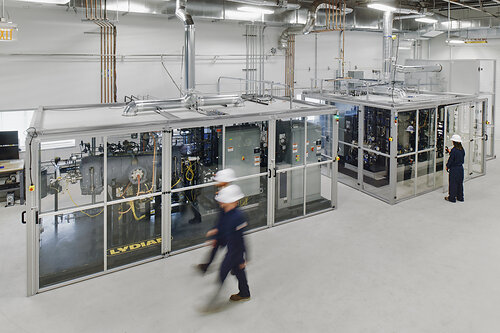
US synthetic fuel producer Lydian, closes a $43 million series A funding round, led by Breakthrough Energy Ventures. Other investors in the round are AP Ventures and Builders Vision, as well as some existing investors following on.
The financing supports the launch of PIVOT, Lydian’s full-stack production platform. PIVOT is purpose-built for low-cost renewable electricity and the realities of modern power markets. The platform combines Lydian’s proprietary reactor technologies, catalysts, process design, software, and balance-of-plant into standardised, factory-built modules that reduce project complexity while improving economics.
“PIVOT represents a fundamentally different approach to synthetic fuel production,” said Joe Rodden, CEO and co-founder, Lydian. “By designing every part of the system for lower capital costs, greater operational flexibility, and faster deployment, we’ve created a platform for commercially competitive synthetic fuel projects. This financing gives us the resources to bring that vision to market.”
This is also the first public deployment from the Breakthrough Energy oneworld BEV fund, a strategic investment fund supported by leading global airlines and members of the aviation industry.
“Decarbonizing aviation will require advanced fuels that compete on cost, work within today’s aviation infrastructure, and deliver the performance flyers and airlines expect,” said Carmichael Roberts, chief investment officer, Breakthrough Energy Ventures. “Lydian is taking on that challenge with a purpose-built approach to synthetic aviation fuel production. Its PIVOT platform combines strong technical innovation with a practical path to better project economics, offering the aviation industry a low-carbon fuel capable of cost-competitive, commercial-scale production.”
Lydian is already operating a tonne-scale pilot plant at its Boston-based R&D Center of Excellence. The company is advancing a commercial demonstration facility targeted for operation in 2028, with its first full-scale commercial deployment expected in 2030.