
Will Singapore’s SAF levy strike the right note?
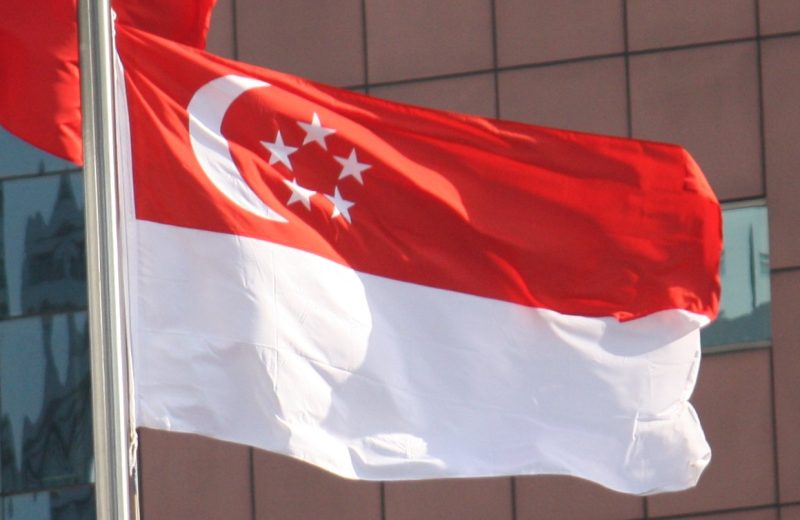
If you collect foreign currencies, it’s worth checking whether your portfolio includes a Singaporean 1,000 dollar note. If you find one, it might come in handy the next time you want to pay for sustainable aviation fuel (SAF) in Singapore.
Starting October this year, the island nation will implement one of Asia’s most comprehensive SAF policies. At its heart will be a mandatory SAF levy applied to all passengers – except those in transit. These include cargo and business aviation flights. The levy takes effect for tickets sold from April 1st, 2026, applying to flights from October 1st, 2026. Also included are funding plans and procurement policies.
“Simply mandating the use of SAF would impose unpredictable and unsustainable costs on airlines and passengers as SAF prices may vary significantly,” says Singapore’s minister of state for Transport and National Development Sun Xueling. “This is why Singapore will adopt a fixed-cost envelope model, funded through a SAF levy.”
The principle behind the levy is distance travelled with premium passengers paying four times the economy rate. For cargo, the levy will be calculated based on per kilogramme.
“We have set the SAF levy for an economy ticket at between S$1 and S$10.40, and the equivalent levies for business- and first-class tickets at between S$4 and S$41.60,” says Daniel Ng, chief sustainability officer, Civil Aviation Authority of Singapore (CAAS). “This endeavours to keep costs manageable and ensures that our air hub remains price competitive,” he tells us.
After consulting with industry and stakeholders, Ng says the SAF levy is not expected to have a significant effect on air travel demand and the competitiveness of Changi Airport.
While SAF policies in the EU and UK have focused on mandates, Singapore’s approach has been markedly different. Instead of focusing on market factors to develop the industry, the country’s policy is rooted in stimulating the sector.
Ng says the levies will remain “unchanged even if SAF prices were to rise later”. All of the revenue generated from the levy will flow into a dedicated SAF fund. The fund works under strict restrictions. It can only finance SAF and environmental attributes certificates (SAFc) procurement, plus administrative costs including certification, blending and delivery of SAF.
CAAS says this ring-fencing ensures financial transparency and gives a good visibility into cash flows enabling longer-term procurement contracts. The fund also deals with demand uncertainty by guaranteeing sustained SAF purchases, providing the demand signals suppliers need to invest in production capacity.
To enforce the levy and implement the fund, the country established a dedicated Singapore Sustainable Aviation Fuel Company (SAFCo) in late 2025. The SAFCo will aggregate demand from multiple sources including mandatory levy-funded purchases, voluntary corporate buyers and airline discretionary commitments.
Under SAFCo’s ambit also comes the procurement of SAF which it says will do through competitive tenders requiring suppliers to meet international standards including CORSIA certification. With predictable long-term cashflows from levies, CAAS anticipates it will have the freedom to enable longer-term contracts at competitive prices.
While the fuel procured will be available to airlines to be lifted at the Changi Airport, for voluntary participants such as corporates, SAFCo offers an attractive alternative to independent procurement systems. Corporate buyers can access verified SAF while leveraging baseload regulatory demand for better pricing terms.
For Asia’s aviation market, Singapore’s integrated model addresses key adoption barriers: cost uncertainty for buyers, demand uncertainty for suppliers and administrative complexity for airlines.
Whether this can be repeated elsewhere depends on local structures and regulatory capacity. But, as Ng promises, CAAS will “continue to keep a keen eye on cost”.
Subscribe to our free newsletter
For more opinions from SAF Investor, subscribe to our email newsletter.