
Phelan Group looks to thin air for eSAF supplies
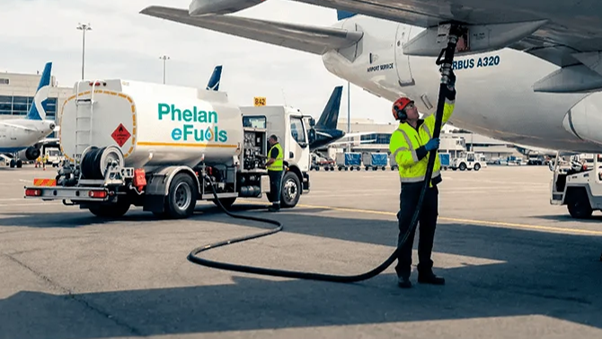
Phelan still faces several major hurdles, most notably securing binding credit agreements.
“Melted into air, into thin air.” Shakespeare coined the phrase near the end of his play The Tempest. But for renewable energy entrepreneur Blair Phelan, thin air is the start of his e-SAF production process. He is pulling synthetic kerosene out of thin air at Saldanha Bay, South Africa.
“We’re in renewable energy and have been in this space for more than 20 years,” Phelan, MD Phelan Group tell us. “Between South Africa and India. We have more than 500MW of renewable energy connected to the grid.”
Phelan uses both solar and wind to produce the renewable energy. “Three years ago, we made a pivot into aviation and the eSAF market. We now have a fully designed and ready to start construction on a plant to produce 35,000t of eSAF per annum,” the MD tells us.
Honeywell UOP and Johnson Matthey are technology partners at the site. But Phelan Green is the developer and main investor. The plant is slated to begin fuel production in 2029 to meet the EU’s eSAF mandate starting in 2030 for eSAF upliftment.
A plant producing 35,000t of eSAF requires continuous dedicated power supply in the range of 100-120MW. With its existing power generation sites already under long-term power purchase agreements with national grids, Phelan is planning new generation sites for eSAF production.
“For the first phase, we are building 350MW [to adjust for load factor] on our site of solar, and then we will be matching that with wind. We will buy in through the grid. So, it’s a mix of both,” Phelan tells us.
The board’s final investment decision (FID) for the project arrived this month. With more than 50 eSAF projects announced around the world, Phelan is the second eSAF project (after Project Roadrunner in US) to achieve FID.
However, Phelan still faces several major hurdles, most notably securing binding credit agreements. The company expects to make announcements on this front in the coming months.
The site will have an initial equity commitment of $100m from the family business. But Phelan says the total capital expenditure required is north of $750m. “It includes the renewable energy installation on site, so the solar. It also includes a battery element,” he says.
To finance the remainder, the group is looking at development finance. “We’re working with the International Finance Corporation, part of the World Bank Group. We also pulling in quite a few different development finance institutions, but on the debt side more so,” he says.
The company is in preliminary discussions with offtakers for long-term agreements. “Currently, we’re talking about 8-to-10-year periods of offtake to lower the cost of debt,” he says.
“But because we’re first mover in the space, it’s [the project] very capex intensive. The cost of funding is high in comparison to tried and tested industries,” Phelan says. But with long-term offtake commitments, they should be able to lower the cost of capital.
Offtakes have been the bane of eSAF projects. Buyers are unwilling to commit long-term, especially in Europe citing high price premiums, lack of financial flexibility mechanisms and regulatory uncertainty regarding national non-compliance penalty enforcement.
Phelan says their inherent advantage lies in their low-cost energy production. “What I can say is we’re below €10,000 a tonne [in terms of per tonne sales price of eSAF]. And the mandates in Europe are closer to €14,000 per tonne,” he adds without giving the specific levelised cost of production of their eSAF molecules.
This is their key advantage against their eSAF producing counterparts in Europe who have to pay high energy costs making their molecules significantly more expensive, he says. Initial plans involve selling the molecules to Europe.
Subscribe to our free newsletter
For more opinions from SAF Investor, subscribe to our email newsletter.