
NorSAF bets on Baltics for European SAF
Avia Solutions Group is an unusual airline. Rather than operating its own flights, it specialises in providing aircraft and crew when others need them. This could be helping them explore routes or assist if a technical issue has happened. It is the biggest provider of these services globally. Now it wants partners to help it make sustainable aviation fuel (SAF).
NorSAF is a sustainable fuel developer based in Latvia and Avia Solutions Group is acting as a partner on the project. NorSAF will benefit from access to the Group’s aviation infrastructure, including its subsidiary Baltic Ground Services, which has extensive experience in SAF supply and distribution.
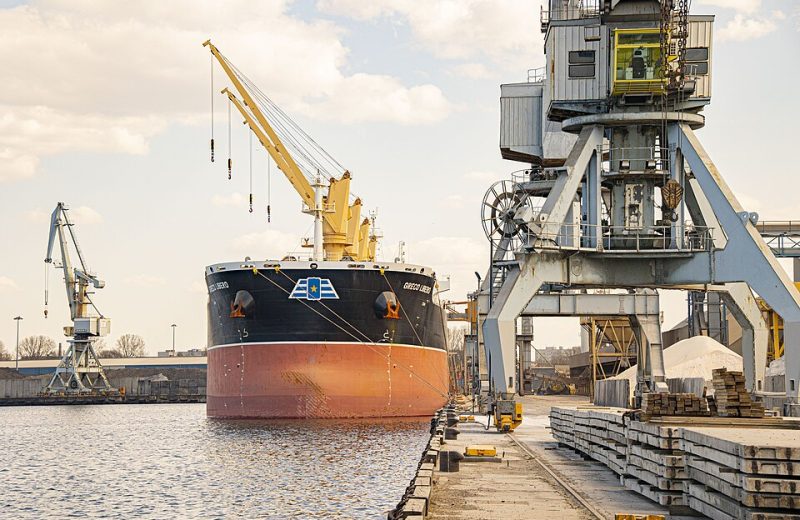
NorSAF is focusing on the alcohol-to-jet (AtJ) and synthetic eSAF pathway and has chosen Latvia’s Liepaja port as the site for the project.
‘A good location’
“It is a very good location, we have an existing jetty and all the infrastructure, which is dedicated to most of the light products and especially petrochemicals. So, a SAF plant fits very well with all our existing infrastructure,” Janis Kisiels, founder and board member, NorSAF tells SAF Investor.
The project will use technology licensor KBR’s PureSAF technology, invented and developed by Swedish Biofuels, to convert biogenic alcohol into SAF. The company is on its way to confronting Front-End Engineering Design (FEED) studies and is targeting FID in Q1 2028.
The nameplate production capacity is 100,000 tonnes/year, 60% as biomass-based AtJ and 40% eSAF. This would make NorSAF the largest SAF and synthetic SAF producer in the Baltics.
Feedstock flexibility
“We deliberately designed NorSAF not to depend on a single feedstock or a single SAF pathway. Advanced SAF and eSAF face different resource constraints, so combining both gives us a more resilient and diversified project,” Kisiels tells us.
Latvia has the potential to not only export SAF to the rest of Europe, but also feedstock.
“The Baltics have a vast amount of biomass availability. And currently for SAF production, these feedstocks are not widely used,” says Kisiels. “The concept is that Europe will gain a lot from Baltic biomass availability. This is not only a climate issue. It is about industrial policy, energy security and strategic resilience.”
It is not feasible for Europe to be totally self-sufficient in all feedstocks. However, it should avoid replacing the current strategic dependence on imported fossil fuels with imported feedstocks, says Kisiels.
Sign up to receive our newsletter here.
Latvia produces about seven million tonnes of woody biomass annually, half of this is used domestically, with the other half exported to the European market.
A considerable amount of this has previously been used in other markets but now there is an opportunity for repurposing biomass into SAF production, Kisiels tells us.
“The European Union, to decarbonise the heating sector, is shifting production to heat pumps and sustainable electricity, generated by wind and solar power. So, we consider that biomass, which was used for heat production, can be used for SAF production.”
Supporting second-generation SAF
Kisiels is keen for there to be additional support for second-generation SAF pathways. European policy accounts for guaranteeing SAF demand through the mandates. It also includes eSAF through the sub-mandate from 2030. He believes there should be an additional sub-mandate for advanced pathways using feedstocks that fall under Annex IX, Part A of the EU Renewable Energy Directive (RED).
“The biggest risk for Europe is not that we choose the wrong SAF pathway. It is that we spend too long deciding and do not build enough production capacity at all,” Kisiels says.
First-of-a-kind technologies are going to be crucial components to long-term SAF market scale-up. Ensuring these technologies can reach commercial scale is crucial, policy and CAPEX support can play an important role in ensuring the increased costs are not entirely held by airlines and their passengers.
This becomes especially important after 2030 as the SAF mandate scales from six percent to 20% in 2035.
“HEFA Feedstocks, such as lipids and fatty acids, are limited and that’s why to reach the mandates you need to have alternative feedstock,” says Kisiels.“We cannot substitute the missing part with eSAF. So that’s why we need to find some similar to a HEFA-priced product.”
NorSAF have calculated that the company’s advanced SAF will be 20-25% more expensive than HEFA SAF and strongly believe that second-generation AtJ SAF can fill the gap to fulfil EU mandates.
Reliance on HEFA is not a feasible long-term strategy for the European SAF market. Scaling alternative feedstocks is an ongoing challenge and using what is available in places like Latvia will be crucial to meeting long-term market demand.
Subscribe to our free newsletter
For more opinions from SAF Investor, subscribe to our email newsletter.