
Turkish Airlines seeks SAF delight in SAFFA Fund
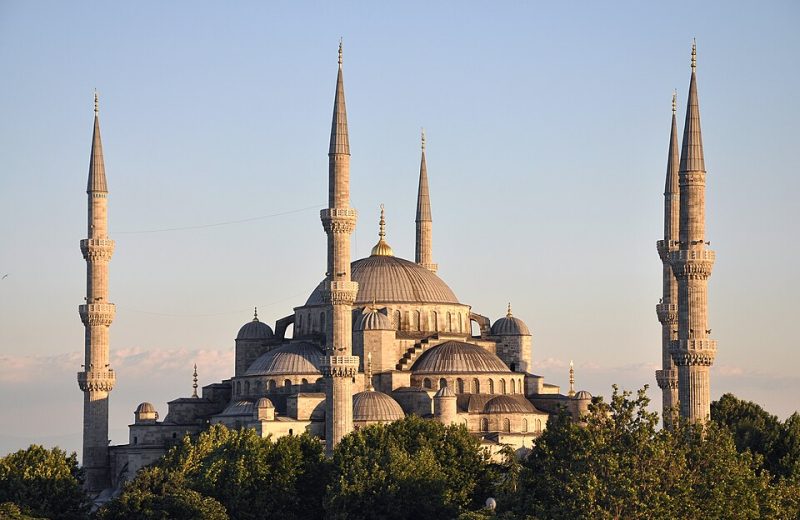
Istanbul has had many names. Originally the city was named after the Greek founder Byzas, who founded Byzantium in the 7th Century BC. It continued to be known by this name until the fourth century AD when the Roman Emperor Constantine humbly renamed the city Constantinople in 330 AD.
When the Ottomans conquered the city in 1453 Sultan Mehmet II changed the name to an Arabic version, Kostantiniyye. This remained the official name until 1930 when the city finally gained its current name, Istanbul.
A natural fit
The city’s airport, Istanbul International Airport, is now the busiest airport in Europe and sits as the pivot for national carrier, Turkish Airlines’, global operations. The airline flies to more countries than any other, 126 in all, and is one of the fastest-growing airlines in the world.
This makes the airline a natural fit as the latest partner for SAFFA Fund I, LP (SAFFA fund), the Sustainable Aviation Fuel Financing Alliance fund, says Barbara Rezende, principal, Burnham Sterling Asset Management (BSAM).
“Turkish [Airlines] is growing at a very fast pace, which is unique given that it is already one of the largest airlines in the world. They are going through this growth phase, and it’s what we are doing as well, trying to grow SAF availability. We have a lot of synergies with Turkish,” she tells us.
Decarbonisation challenge
BSAM manages the SAFFA fund, which was launched in late 2023 with Airbus as the anchor investor. Other investors include Air France-KLM, Qantas, Associated Energy Group, BNP Paribas, CMA-CGM and Mitsubishi HC Capital.
The fund also continues to engage with other potential LPs in the aviation ecosystem that could join the fund, Michael ‘Dickey’ Morgan, executive MD, Burnham Sterling tells us.
Sign up for our newsletter here.
BSAM is part of Burnham Sterling & Company (Burnham Sterling). With deep aviation connections from that aircraft financing business, Burnham Sterling understands the decarbonisation challenge and the aviation industry. This history and the long-standing connections across the aviation industry led to BSAM winning the mandate to manage the fund in a competitive process, says Rezende.
“The SAFFA fund is seeking to build a portfolio of companies that BSAM believes will be able to help increase the amount of SAF available to power commercial aircraft,” says Morgan. “As one of what we believe to be the few dedicated commingled SAF investment funds, the SAFFA fund is positioned, in our opinion, to bring together strategic industry participants who share the common interest in expanding SAF availability.”
Investment due diligence
As the SAFFA fund’s investment manager, BSAM holds authority over investment decisions. The fund’s mandate fits across all SAF production pathways and this flexibility is reflected in the dollar amounts the fund can commit to projects, provided they fit within BSAM’s risk return models, Rezende tells us.
BSAM welcomes conversations with project developers, but they should be aware, decisions around where the fund invests is not a quick process; there is a lot of due diligence.
“We generally look at each opportunity in detail, and sometimes it’s frustrating for the projects because it takes time,” says Rezende. “Our due diligence process is extensive. We generally go through technology due diligence, financial due diligence, legal due diligence. It all takes time.”
SAF One
The fund has made several investments. One such investment, announced in January 2026, involved a commitment of up to $30m to SAF One’s HEFA facility in Bahrain.
“When evaluating SAF One, we considered the full range of our investment parameters. We look at the project itself, one of the sponsors of the project, we know them, they have a good track record [Novus Aviation Capital],” says Rezende. “Feedstock is secured, offtake is secured, the EPC [Engineering, Procurement and Construction] is a company that we know and has a good track record. Overall, the project met our investment parameters.”
SAF One’s technology is provided by Honeywell; Tata Projects is acting as the EPC partner and there are substantial offtakes with DHL and Trafigura in place. SAF One also acquired feedstock and biofuels trading company Green Biotrade in 2025 to bolster the project’s feedstock supply.
The fund has the option to invest more into the project depending on it’sdevelopment.
The fund has also invested in frontier-technology business, including Safion Renewables. Safion is a US-based biotechnology company with proprietary technology for producing next-generation HEFA feedstocks. It is also developing bio-based chemicals for use in the green-solvents market.
Istanbul, straddling Europe and Asia, has always been a fulcrum around which history has unfolded. BSAM and the SAFFA fund also hope to be a central axis around which the global SAF industry can develop, now bolstered by the addition of Turkish Airlines.
Hopefully the SAFFA fund can have a long-standing importance like Istanbul, but hopefully without a rebrand.
Subscribe to our free newsletter
For more opinions from SAF Investor, subscribe to our email newsletter.