
Neste’s strong financials could pose a problem for SAF
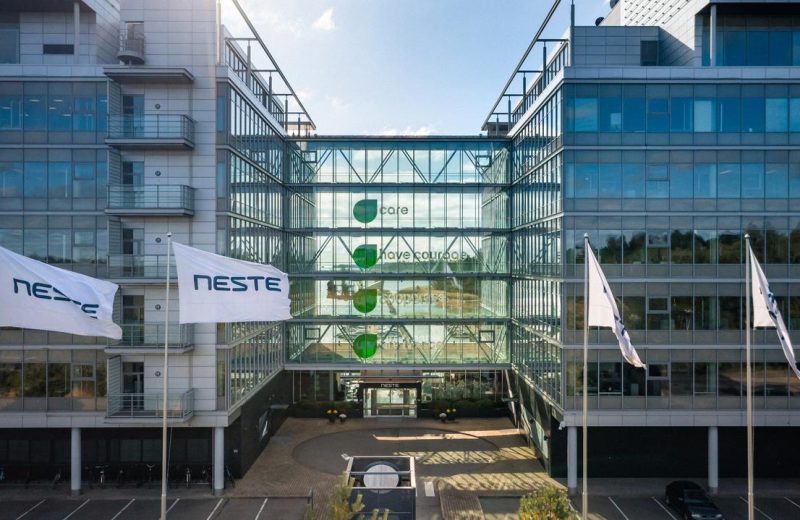
Neste’s recently announced financial results for the second quarter (Q2) of 2026 were very good. “This Q2 was the best quarter financially ever for Neste,” said Heikki Malinen, CEO, Neste, on the company’s earnings call.
Renewable product sales totalled 1.026 million tons. This is up from the 0.874 million tons in Q1 of this year, but down from the same quarter in 2025 when Neste sales totalled 1.096 million tons.
However, there is not such good news for sustainable aviation fuel (SAF), as sales fell to 145,000 tons in the second quarter. Production followed the same pattern: SAF output dropped to 126,000 tons from 290,000 tons.
The company did see record gross margins for renewable diesel (RD) this quarter at $1,223/ton. This is up from $856/ton in Q1 and $361/ton this time last year.
“We all know diesel prices were high in the quarter. But I would also draw your attention to the RIN [Renewable Identification Number] prices. We have seen a marked strengthening in the US market, which started in Q1 and continued in Q2, and that is obviously supporting our US business significantly,” highlighted Eeva Sipilä, CFO, Neste.
This came from the US Environmental Protection Agency setting the total applicable volume for the D4 RINs (for biomass-based diesel) at 9.07 billion for 2026 and 9.20 billion for 2027.
Sign up for our newsletter here.
The emphasis on RD production isn’t unique to Neste. Speaking to SAF Investor, Peter Gastreich, MD for Energy Transition & Sustainable Investing, Water Tower Research, tells us that for Darling Ingredients, which operates the Diamond Green Diesel plant in the US, this shift towards RD is structural. “Darling Ingredients said that RD is outrunning SAF in Europe’s mandated market while SAF still commands a premium in the US voluntary market,” he says.
Neste saw a utilisation rate of 75% for the renewable products facilities in Q2, a rate that Sipilä referred to as “unsatisfactory” and below the target 80% rate. The company also has three scheduled maintenance events in the second half of 2026. There is an eight-week turnaround at the refinery in Porvoo, Finland. There will be an eight-week turnaround in Rotterdam in Q4 of this year as well as an 11-week turnaround starting in December for one production line at the Singapore facility.
These downtimes aim to improve the utilisation rates of all the facilities and improve their ability to manage a wider variety of feedstock. Being able to process a wide variety of feedstocks is becoming a crucial diversification hedge against rising feedstock prices and growing concerns around hydrotreated vegetable oil (HVO) availability.
“The company is also exploring the potential of lignocellulosic feedstocks and production technology to add further diversification into the 2030s.” said Malinen on the earnings call. “As we develop our business over decades, we need to also consider what would be the next source of feedstocks beyond. And the ligno [cellulosic] pool is substantially larger than what we have in waste and residue,”
Although SAF remains a small proportion of Neste’s global production, the company is bullish around its potential as a production market.
“No major decisions were announced this year. We are on the current trajectory with a 35% increase; of course, it is still a small, very nascent market,” said Malinen. “But of course, recognising that the fossil jet fuel market is huge and continues to grow, there is also significant upside potential in this area as we go forward. And, we are doing our own work to advocate the benefits of SAF and look forward to seeing the 6% then being implemented in 2030 in Europe.”
Gastreich pointed to two key tailwinds for diesel specifically. “In the US, RD has been supported by RIN and RVO strength and that should still remain attractive next year,” he said. While adding that Russian refinery outages are further compounding the effect. These outages have hit diesel disproportionately to jet fuel.
All in all, it has been a good second quarter for one of the world’s biggest SAF producers. The only question for those in SAF, what could shift more RD production into aviation?
Subscribe to our free newsletter
For more opinions from SAF Investor, subscribe to our email newsletter.