
Ronaldo and SAF logistics firm Exolum both looking to score
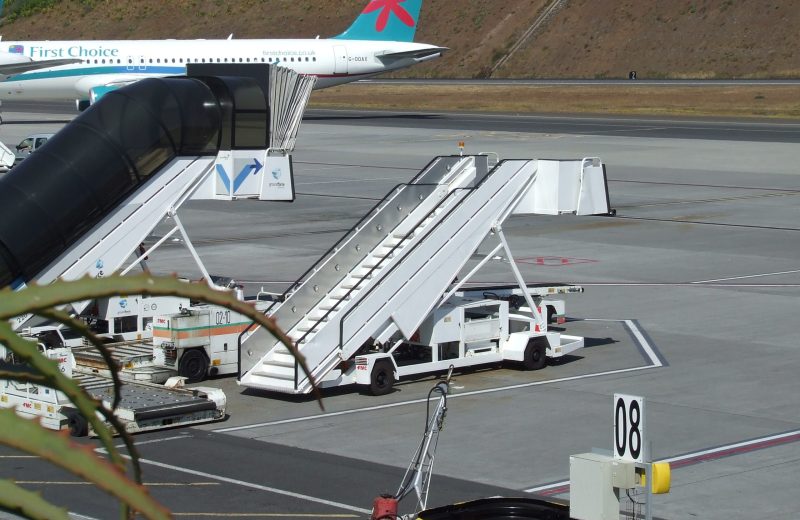
For remote airports, the challenge has been storing physical capacity.
This summer, all eyes will be on Cristiano Ronaldo. The FIFA World Cup 2026 kicked off yesterday, and Portugal’s greatest footballer – whose name graces Madeira’s international airport – is making his sixth attempt to win it. A joint record shared with his arch rival Lionel Messi and Mexican veteran goalkeeper Guillermo Ochoa.
The airport named after him in his hometown of Funchal, Madeira is also having its own moment.
This month, biofuel storage specialist Exolum started operations at Cristiano Ronaldo International Airport, committing €4.5m ($5.2m) to expand the facility’s fuel storage and distribution infrastructure by 2029. For Exolum, this SAF infrastructure programme is one of its network of 50 airports spread across two continents.
“Exolum is one of Europe’s leading SAF logistics operators,” Iván Saco, vice president, commercial airports, Exolum tells SAF Investor. “Today, we manage SAF across virtually all of our airport operations where there is market demand.”
In October 2025, it announced a £4.5m ($5.7m) investment to build the UK’s first independent SAF blending facility at Redcliffe Bay, southwest England. It is part of its long-term plan to develop a nationwide network of blending hubs across its 2,000km pipeline network, providing SAF access to airports handling around 40% of all flights departing the UK.
In Spain, the company has committed €50m at Barcelona-El Prat Airport to embed SAF capability at one of Europe’s busiest hubs. In Lima, Peru, it is investing another $80m at Jorge Chávez International Airport. Exolum says SAF readiness is part of all of these investments.
The Cristiano Ronaldo Airport Madeira fits that pattern. The island’s geography makes the availability of SAF considerably more complicated than on the mainland. “Like the rest of the aviation fuel supplied to the airport, SAF would need to reach Madeira by sea,” says José Luis Conde, vice president, Aviation Operations at Exolum.
“The most likely scenario is that it would arrive already blended with conventional jet fuel, although the specific logistics configuration will depend on the decisions made by the fuel suppliers.”
The investment will expand storage capacity to 1,300 cubic metres and extend the airport’s operational autonomy. With ReFuelEU policy dictating the fuel policy, Portugal and by extension Madeira, sit squarely within the SAF mandate.
“The facilities will be ready to handle SAF whenever one of our customers decides to introduce it,” says Saco.
SAF is a drop-in fuel. For remote airports, the challenge has been storing physical capacity. In other words, the ability to hold enough stock to make a SAF delivery commercially viable. That is precisely what the Madeira investment addresses. This challenge becomes more prevalent when the flexibility mechanism under ReFuelEU regulations expires in 2035.
Exolum has quietly become Europe’s most important SAF logistics operator. In 2024, the company managed around 20% of all SAF consumed in Europe. During 2025, it received and blended more than 30,000 cubic metres of neat HEFA in Spain and managed a further 162,000 cubic metres of blended HEFA through its infrastructure.
It has also completed the first pilot project involving the transportation of neat SAF through a pipeline.
“All improvements are being implemented with a long-term perspective and will help ensure that the infrastructure is ready to support the aviation sector’s evolution and the gradual adoption of SAF whenever market demand emerges,” says Conde.
Ronaldo has waited his whole career to lift the elusive World Cup trophy. SAF demand has been a long time coming too. When they do, Cristiano Ronaldo International Airport will be ready for both.
Subscribe to our free newsletter
For more opinions from SAF Investor, subscribe to our email newsletter.