
Commercial eSAF aiming to be cheaper by the dozen
You may or may not have realised but a large portion of your life revolves around the number 12. Twelve hours on a clock face. Twelve inches in a foot. Twelve months in a year. If you are into music, 12 notes in an octave. Christians recognise the 12 disciples. If you are a scientist, you will know 12 is also the atomic mass of carbon.
This is the reason behind the naming of sustainable aviation fuel (SAF) producer, Twelve.
“It [SAF] is a new story for carbon. We still need tons of carbon to drive our global economy, visit our families and have running shoes, but it doesn’t need to come from ancient carbon in the ground anymore,” Nicholas Flanders, co-founder and CEO, Twelve, tells SAF Investor.
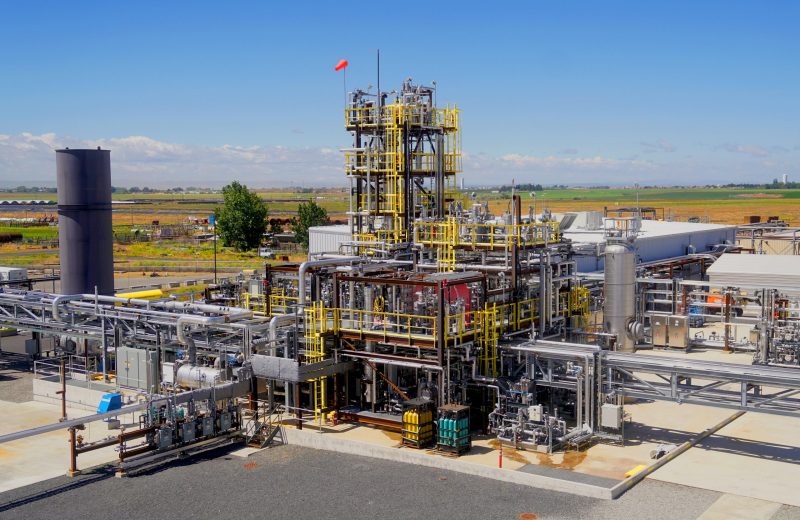
In June this year, Twelve started commercial eSAF production at their AirPlant One facility in Moses Lake, Washington. The first commercial E- Jet SAF production in the US.
“It’s a big milestone for the industry. I think it’s really important to have volumes of eSAF going onto commercial flights, so that conversations both with customers and with policymakers are about scaling something that’s already in the market as opposed to a theoretical future fuel,” says Flanders.
Over the coming months the company aims to ramp up production to the plant’s nameplate production capacity of 50,000 gallons per year.
Moses Lake was selected as the first site because of a dam on the nearby Columbia River providing some of the cheapest hydroelectric power in the US.
The initial commercial production of a new technology stack can be challenging. We have seen issues with other SAF producers scaling up initial commercial operations. Flanders is confident that the Twelve technology stack is performing as expected.
“The team did a really good job during the startup phase where we were able to very quickly get to on spec fuel. As you turn on each process section, then you start connecting the flows and then you started making product and then, you need to really dial it in, dial in the conditions too,” says Flanders.
During the company’s development Flander’s highlights the requirements to “evolve the company’s DNA to address particular milestones that you are focused on”. Moving from a developmental phase, into a scale-up phase and now a project execution phase is important for project completion. This evolution is also important for the capital stack as a company develops.
The company has raised several hundred million dollars across multiple funding rounds since the company was founded in 2015. This is topped up to nearly a billion dollars in future infrastructure capital commitments.
This funding has been split between technology development funds for the AirPlant One CAPEX costs and as well as some project equity for future projects.
“We do have a $400m project equity framework with TPG and some of our other investors also have project equity capacity,” says Flanders
Twelve has a couple of potential sites in the US lined up for AirPlant 2. The company is eyeing up locations with consistent access to low-cost renewable electricity and a CO2 source alongside good infrastructure connection.
Twelve’s capital table includes numerous strategic investors including Alaska Airlines, through its venture capital investment arm Alaska Star Ventures, Microsoft through the Climate Innovation Fund, and Amazon through the company’s Climate Pledge Fund.
These companies are also acting as crucial offtakers for AirPlant One. The eSAF produced at the facility is being delivered to airline partners. Uptake by Alaska Airlines is expected to take place later this year from Seattle-Tacoma International Airport. Microsoft will be claiming the Scope 3 certificates from these fuel deliveries through a book and claim system.
“Investors will look to see, are there customers who want to buy that product? And so having partners who have been with us since even before we started building this plant, is really important,” Flanders tells us. “And also, the three-way partnership [partnership with Alaska Airlines and Microsoft] that we have is an important model for a new pathway. Having a partnership where the cost of the new fuel can be shared between the airline and then the airline’s customer is an unlock.”
Flanders also hopes that within the next year there will also be some international flights powered by eSAF from AirPlant One, through the company’s partnership with International Airlines Group (IAG).
Seeing commercial production for eSAF in the US is a big milestone for the industry. But to be competitive as an eSAF producer means ensuring the costs of capital and production generating a price-competitive product is vital.
Twelve is confident its strategy means eSAF can be cheaper by the dozen.
[Image courtesy of Twelve]
Subscribe to our free newsletter
For more opinions from SAF Investor, subscribe to our email newsletter.