
European Biofuels and SAF Summit: SAF’s “magic triangle”
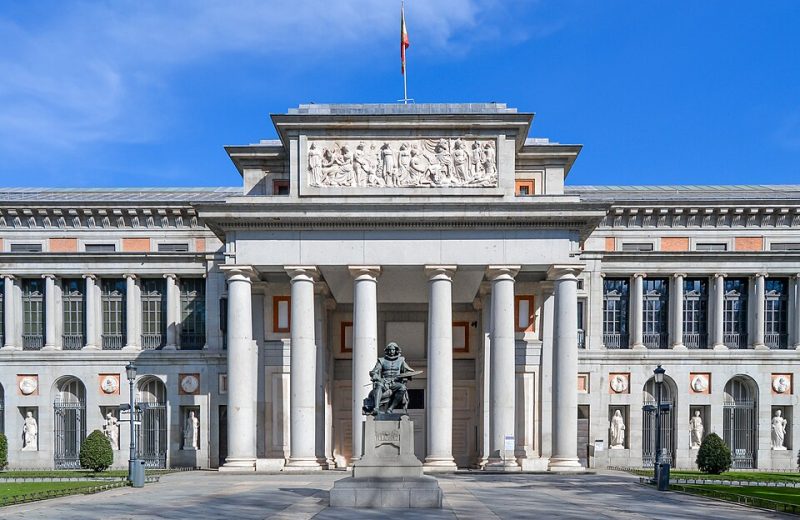
If you are an art lover, you might go to Madrid to see the city’s Golden Triangle of Art. Comprising three museums, the Prado, Reina Sofia and Thyssen-Bornemisza, these museums house major works such as Picasso’s Guernica and Valzequez’s Las Meninas.
This week the sustainable aviation fuel (SAF) and biofuels community gathered in Madrid for the European Biofuels and SAF Summit, organised by Leader Associates, to discuss their own triangle, the “magic triangle,” as Melanie Astruc, SAF project director, Airbus put it. This is the connection between policymakers, producers and offtakers.
Taking the top of the triangle, regulatory frameworks dominated large portions of discussions and are still vital components to scaling European SAF production.
Piotr Szymański, director for Energy, Mobility and Climate, Joint Research Centre, European Commission opened the event by saying “science for policy helps turn ambition into practical reality”.
Policy creates ambition but in order to generate the desired effect it needs to be long term and consistent. This was mentioned by various stakeholders across the value chain.
“Long-term policy is crucial for creating investible conditions,” said Shelley Wheeler, vice president, Biofuels Growth Portfolio, BP.
Sebastien Le Corre, head of OneJetSAF, Total Energies agreed that policy is currently the backbone behind demand as the majority of SAF sold in Europe comes through the fulfilment of the EU SAF mandate.
However, the complexity of the policy structures is still a challenge. The lack of interoperability between these policies makes compliance potentially more difficult than it should be, highlighted Astruc.
On the production corner of the triangle, perfection should not become the enemy of the good, said Ruben van Grinsven, global head of Advanced Fuels and Products, Shell.
“We need to be really pragmatic, make things good instead of trying to make things perfect the first time around. The cumulative risk for perfect is too big for investors.”
Van Grinsven also acknowledged that the energy transition is inherently difficult.
“Changing an established system into something with lower emissions, whilst keeping the lights on is challenging … but we have come a long way and there are many success stories that we should build on,” he added.
The successes are typified by the series of final investment decisions (FID) seen in 2026; SkyNRG’s DSL-01 project in Rotterdam, TotalEnergies’ Grandpuits refinery, Acelen’s project in Brazil, Green Sky Capital in Egypt and Zaffra’s German government grant covering 70% of their Capital Expenditure. These all show as the industry matures, capital is flowing into bankable projects.
Bankability was emphasised through strong feedstock and offtake structures, on the third side of the “magic triangle”.
Projects need long-term visibility on feedstock of at least 15 years in order to be considered for financing. But Carla Bianco, associate director, Suma Capital was bullish on this aspect for efuels as localised feedstock supply could mitigate supply chain risks.
This is similar to offtake in guaranteeing revenue certainty.
“Demand has been slower to materialise in Europe. That makes it harder for projects to get demand certainty and for customers to get pricing,” said David Antoni Perez, investment director, PGGM Investments.
Offtakes still prove to be challenging as opaque long term SAF pricing still presents a challenge for airlines as they continue to try to balance market competitiveness with decarbonisation requirements.
The current energy crisis was also a talking point across discussions. BP’s Wheeler acknowledged that this has created an element of uncertainty and disruption but she also emphasised the opportunity it creates. “This [The energy crisis] can galvanise the diversified approach to the combination of energy security and energy transition,” she said.
Airbus’ Astruc agreed that the current crisis creates a chance to innovate and this could be the opportunity to “kickstart European ambition”.
Just as Madrid’s Golden Triangle of Art is a central cultural aspect of the city, SAF’s “magic triangle” between policy, production and offtake is paramount for SAF projects in Europe getting financed. Potentially the energy crisis is the spark to accelerate this collaboration further.
Subscribe to our free newsletter
For more opinions from SAF Investor, subscribe to our email newsletter.