
The accident that revolutionised (SAF) brewing
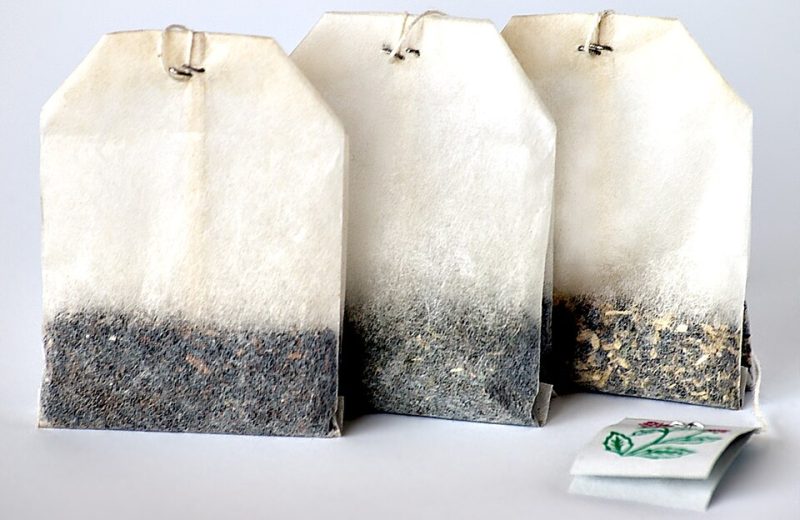
In 1904 American tea trader Thomas Sullivan sent samples to Europe but wanted to keep them separate. He decided to package all the different types of tea into individual silk bags, as opposed to the common practice of loose leaves in wooden crates or sacks. When these bags arrived from across the Atlantic, the recipients mistakenly put these bags into boiling water and the tea bag was unintentionally born.
Today about 7 million tonnes of tea is consumed worldwide annually. A large proportion of this is through ‘accidental’ tea bags.
The team at Hydrocarbon Engineering owes the origins of the company’s novel SAF production pathway to their own accidental discovery.
The company’s initial aim was to produce a bio-oil to go into a bio-refinery. The bio-oil Hydrocarbon Engineering was anticipating was meant to be a very viscous, asphalt-like product. However, the reactor at the company’s facility in Valencia, Spain, instead produced water and a light oil floating on top. After analysis, this oil proved very similar to diesel. This was supposed to be impossible.
“The next step for us was to work out what had happened. Our chemical engineer and partner, Ricardo, took a few years to understand how we were able to produce something that today, the technology is only able to partially achieve with multiple catalysts from multiple proprietaries,” Miguel Ángel Rodríguez Gómez, chief industrialisation officer, Hydrocarbon Technologies tells SAF Investor. “So we had something that in a single stage had produced almost the final product [sustainable aviation fuel]. Totally unintended, totally unplanned. It was a puzzle.”
It took just over five years to work out how this accident happened.
Sign up to receive our newsletter here
The key issue was where the required hydrogen was coming from. To synthesise hydrocarbons from biomass about 100g of hydrogen is needed per kg of biomass feedstock. After the long investigation the company concluded the hydrogen came from the water content in the biomass feedstock. This could then be converted into the hydrocarbon chains for SAF. That was the unique quality of the refining process, removing multiple steps from the technology process.
The simplicity of the technology also allows for lower costs of production. The company has no need for an electrolysis step to generate the required hydrogen. This is often expensive due to the high energy requirements.
“Conventional synthetic fuel routes require several separate stages, including hydrogen production and carbon conversion. Our technology combines the chemistry to do a single hydrothermal process,” says Khaled Rashid, operations director, Hydrocarbon Engineering.
The company’s process also generates its own hydrothermal energy, removing reliance on external energy procurement
“Heat is needed for driving the reaction. But if we are producing excess heat and we have to remove it, we don’t have to procure it. Meaning, the energy is not procured. That makes a huge difference in the cost of the product,” Gomez tells us.
The company claims it can produce SAF at a cost of $1.5/kg, due the streamlined production process and self-generating energy production.
The fact that Hydrocarbon Engineering has a product, even if it was accidental, means it is bullish on the process’ Technology Readiness Level (TRL).
“When reverse engineering a plant, the understanding of TRL is different, because we are not coming from an idea that is tested in the laboratory, then scaled up until you reach the pilot stage. On the contrary, we have an industrial scale plant that was designed for something, but actually it behaves differently and is consistently able to repeat it,” Gomez says.
This has been done over 23 pilot production campaigns over the last 10 years to reach TRL six, placing the company in the middle of the progression from R&D to commercial deployment. The company received a European LIFE programme award in 2018.
There have been many different versions since Sullivan’s silk tea bag. On receiving feedback from his customers, he then began to make them out of gauze and then paper. Over a hundred years of refinement has led to the current materials of choice, natural paper fibres and plant-based plastics.
The Hydrocarbon Engineering team will be hoping that perfecting its technology after its own accidental discovery will not take so long. Maybe a few tea bags will be needed along the way. Or maybe some Spanish sangria.
Subscribe to our free newsletter
For more opinions from SAF Investor, subscribe to our email newsletter.