
Algae finally realising its potential
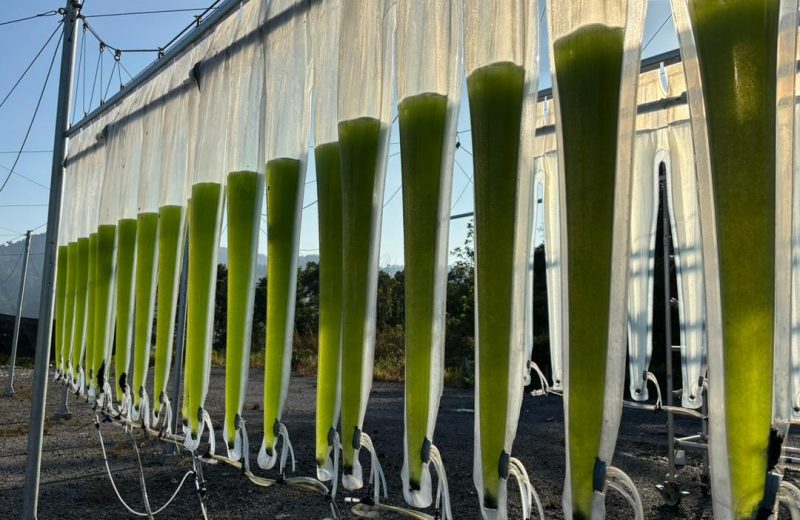
Algae is not a new source of energy. Today’s fossil fuel largely comes from algae that fell to the bottom of the ocean millions of years ago. But if you are reading this, you probably already know that.
Algae is not a new feedstock for SAF either. About 15 years ago there was a lot of excitement that it was the future of SAF but that was followed by disappointment.
The fundamental reason behind this has been the biological limitations of the existing algae strains, Manshu Agarwal, CEO, HutanBio tells us.
“Current vehicles just haven’t been good enough. All the standard strains, people have been trying to tweak them, trying to get them to produce a little more oil, a bit more growth, slightly more robustness. But that always come with consequences. The downstream engineering has to cover up for those weaknesses in the upstream cultivation. Then it just becomes a weak overall system.”
Agarwal has experience of seeing this first-hand. He joined Sapphire Energy in 2009 and worked on commercialising its algae technology, helping the company raise $100m in investment capital. He then moved to Synthetic Genomics, which became Viridos. These companies were very well capitalised with strong backing through companies like Breakthrough Energy and ExxonMobil. However, both struggled to scale the biology to meet investors’ return expectations.
Agarwal admits that this reputational hangover is a challenge that he still wrestles with today at HutanBio. The company is building a pathway to convert oil extracted from algae into a bio-oil, which can be sent off for upgrading into SAF.
“People look at what’s happened in the past, and they think, so much money has been wasted in their mind,” says Agarwal. “It feels like there hasn’t been the progress that was expected. But there are various reasons why it hasn’t worked. And we’ve taken a very different approach to what’s happened in the past,” he says.
Sign up to receive our free newsletter here.
Solving the scale-up capability meant going to the source of the problem, the algae species. HutanBio founder, John Archer, whilst working at King Abdullah University of Science and Technology (KAUST) in Saudi Arabia, spent a decade exploring new species of algae.
Archer scanned a trillion different organisms and found 400 types of algae that met the criteria, including discovering an entirely new algae strain. This new strain, called Sphaerica, has round cells, hence the name, thick cell walls and has 300 thylakoid layers (the area of the algae where photosynthesis happens). This is significantly more than the typical 6-10 in strains previously used. In addition to this, Sphaerica cells quadruple, as opposed to double, which dramatically increases the growth rates. All these combine together to make significantly more promising yield rates, whilst also being more resilient to contamination and being eaten by microbes that live in sea water.
Getting this wrong causes large additional CAPEX expenditure, another reason for previous attempts stalling.
“I’d say most projects have suffered massively because of system crashes. What that means is that you then need to add extra capacity to overcome those. That increases the capex still further to a pretty high base,” says Agarwal.
Understanding infrastructure investment risks is something that venture capitalists have been wrestling with, as this is very different from the software industry where the majority have their origins. This is one thing that has changed a lot in the last 10 years as VCs now understand the process better and are now “asking the right questions,” Agarwal tells us.
HutanBio has so far raised £6m, with Clean Growth Fund as the lead investor. The company is in the middle of its series A raise aiming for around £15m, so Agarwal is at the coalface of engaging with investor due diligence to attract investment.
There is still a long way to go for algae to prove it can meet the expectations of 15 years ago. Accelerating natural processes is always challenging but discovering and using a recently discovered natural form of algae seems to be a good place to start.
Let us know if you think algae can reinvent itself and become a competitive and globally viable pathway.
Subscribe to our free newsletter
For more opinions from SAF Investor, subscribe to our email newsletter.