
LanzaJet getting back over its skis
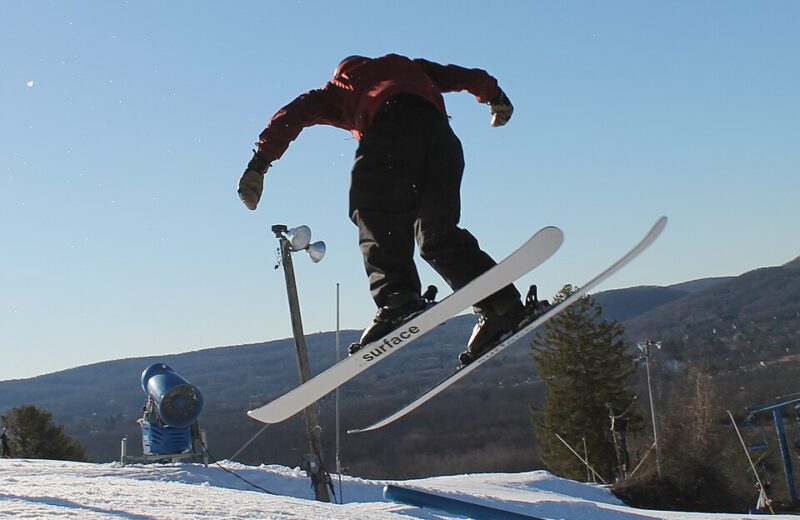
To be a successful alpine skier, certain skills are required. A strong lower body and good balance are important to not ‘get ahead of your skis’. Ensuring you are perfectly positioned above your skis is important to staying in control. Getting too far ahead of yourself can lead to significant consequences. At high-speed, careering down a mountain, this is easier said than done.
LanzaJet, the US-based alcohol-to-jet (AtJ) producer, has been getting ahead of its skis, according to new interim CEO, Jennifer Holmgren.
Holmgren took up this position alongside her role of LanzaTech CEO as part of a “broader recapitalisation and deleveraging of LanzaJet undertaken by its shareholders and existing investors,” according to a statement on October 15th.
LanzaTech, alongside other shareholders, LanzaJet board members and venture capitalist Vinod Khosla, committed at least $20m in financing to support the business as part of a wider recapitalisation and debt restructuring. The final close is expected in December 2026. The previous LanzaJet CEO, Jimmy Samartzis left the company just before this announcement.
“Let’s be frank. The company’s balance sheet couldn’t support the current direction and a financial reset was needed,” Holmgren tells SAF investor. “I went in and did a lot of diligence on the technology and identified risk factors and told my board this company has a lot of potential. The team has built something remarkable and the next phase needs a different approach.”
The process of convincing the board and existing shareholders took four months.
Sign up to receive you free newsletter here.
Although the existing shareholders were unable to commit additional capital, there is a strong desire to collaborate through this ongoing transition.
“The existing investors did a great deal to put us in a position where I could streamline how the company operates and refocus the business. Making the case for the investment required a clear, credible plan,” explains Holmgren.
The plan begins by going back to a start-up mentality; simplifying structures so the team can work more closely together, move faster and focus on what matters most.
The interim CEO is excited by this prospect but understands that this will be a change for the team.
“I see some people fully energised and really excited about the future and what it means and what they’re going to be able to contribute,” says Holmgren. “In a scrappy world, the company becomes flatter, and that creates real opportunity for people to step up, take on more and help shape what comes next.”
Some of the work that is required is a deep look into the technology, Holmgren tells us. Going back to strong technical foundations is a high priority as these are the foundations on which a successful technology start-up is built. LanzaTech’s ability to produce ethanol through gas fermentation provides a strategic link to LanzaJet’s AtJ pathway. This is a strong motivator for Holmgren to re-structure and build LanzaJet into a success.
No other alcohol-to-jet facility has reached FID yet or close to construction. Despite the challenges, LanzaJet is still three to four years ahead of the next AtJ project, Holmgren tells us.
The promise of the company’s technology has meant LanzaJet has been able to attract large amounts of strategic equity investment to get Freedom Pines operational. The company has raised hundreds of millions of dollars from strong strategic equity investors including IAG, Shell and Mitsui, and others.
These investments led to construction completing in 2024. The facility initially achieved full end-to-end production for a short period in 2025, before production subsequently slowed amid technological scale-up challenges. Freedom Pines has a nameplate capacity of 10 million US gallons per year.
LanzaJet also has numerous global project partnerships that are reliant on the success of the Freedom Pines facility, such as IAG with UK-based Project Speedbird, Jet Zero Australia and Cosmo and Mitsui. These partnerships are crucial to LanzaJet’s growth, but their progression is closely linked to the successful ramp-up and sustained commercial operation of Freedom Pines in Soperton, Georgia.
“The Freedom Pines facility is enormously important. The first globally demonstrated alcohol-to-jet facility, at scale, is super relevant to us. Everyone asks us constantly about project-on-project risk,” says Stewart Stewart, CEO, Nova Pangaea Technologies, a partner on Project Speedbird says, on a recent episode of The SAF Podcast.
Sustained commercial production at Freedom Pines will be an important de-risking milestone for projects using LanzaJet’s AtJ technology. A demonstrable operating track record could help these projects attract capital from infrastructure funds and debt providers.
Holmgren will remain in post as interim CEO for LanzaJet until the commercial operation date (COD). This is expected for the first half of 2027, after which a permanent CEO will be appointed.
Falling over is part of learning to ski, and so is getting ahead of your skis. With this restructuring and embracing a start-up environment, LanzaJet should be nimble enough to stay squarely over the centre of its skis and continue to lead the second generation AtJ pathway globally.
Subscribe to our free newsletter
For more opinions from SAF Investor, subscribe to our email newsletter.