
SAF London 2026: Making SAF projects go with a bang
Unexploded ordnance. Endangered butterflies. Ground-nesting birds. These are not the type of risks you would imagine when trying to set up a sustainable aviation fuel (SAF) project.
“These are risks you have to account for. They need to be on your risk register.” At SAF Investor London 2026 conference this week, Richard Marsh, project development manager at LanzaJet, leading the Speedbird project at Teesside, UK raised them as surprises that you rarely expect.
Senior leaders gathered in London this week to work through challenges of financing, building and scaling SAF production. Marsh’s comments served as a barometer for where the industry is. The conversation has shifted from ideas to practical realities.
Sessions took a deep dive into these with optimism that the business case for SAF remains strong. 49% of the attendees said they are cautiously optimistic about SAF in 2026. And while the private sector is putting all the pieces together, governments are providing a level playing field.
Keir Mather MP, UK’s Minister for Aviation, Maritime and Decarbonisation, opened with a clear signal of intent. “Low carbon fuels are no longer a niche idea or a fringe experiment. They are central to meeting this government’s ambitions,” he said in his keynote address at the conference.
“It is about creating highly skilled jobs, strengthening Britain’s industrial capability and delivering energy security for our communities.” However, he conceded that pace needs to accelerate: “I know we need to go further and we need to go faster.”
Developers from Down Under highlighted similar sentiment on the need for government support. “One of the biggest challenges for SAF is the physical capex required to get to any type of volume. It’s billions of dollars in finance with a volatile environment,” said David Scott, chairman, Jet Zero Australia. He highlighted the Queensland government’s support in making projects viable.
Financiers were quick to point out what it takes to secure the capital to fund this capex. “Don’t wait too long before you talk to us,” said Urbano Troncoso Pérez, executive director, Santander Corporate and Investment Banking. “When the project is fully defined, there will be things that lenders are not comfortable with and then it’s not bankable.”
Thomas Engelmann, head of energy transition at KGAL added: “I really hate hearing ‘there is no business case.’” There is capital in the market, the only question is whether developers are bringing projects with merit, he said.
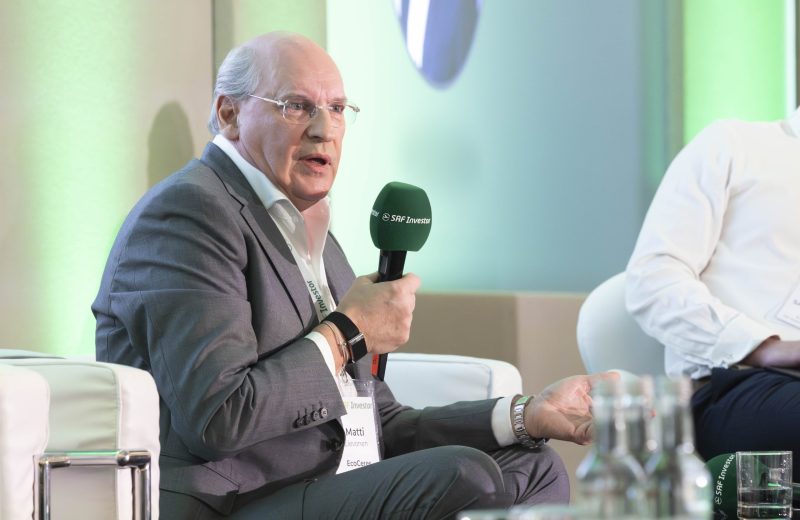
Matti Lievonen, CEO, EcoCeres – the world’s second largest SAF producer – spoke at length about what makes business models successful. “In the last three years, we have been profitable. The market is there. There is a successful business model and it works. We have proved it,” he told the attendees.
He said EcoCeres was able to build plants to produce SAF at a cost of $1,000/t compared with an industry average of $3,000 and achieved maximum capacity at their Johor facility in Malaysia within two months of start-up. It did this without any leverage. His message to those in attendance was simple: “Develop SAF because the market is there.”
But what follows proven technology stack and access to capital is the toughest part for any project developer. James Stonecipher, managing director, EdyMac stressed why efficiency is key when taking the execution step. “As a project developer, you need to be on top of how to manage all of the players on the interface,” he said.
Keigh Taylor of engineering, procurement and consulting company Black & Veatch shared his views about the EPC dynamic facing SAF producers. “When we look at SAF, we want to do work that’s interesting but we are looking to share risk [inherent in SAF projects] with technology suppliers and other EPCs,” said Taylor.
On the demand front, oneworld Alliance’s Matt Ridley explained how structure can help. The alliance has set up the oneworld Alliance BEV Fund to invest in SAF projects. But it was not easy getting them all on the same page. Ridley said getting eight airlines, each with different risk appetite and governance structures, into a single investment vehicle was “a nightmare”. “Seven out of eight airlines that invested had never been part of a fund before,” he said. There are plans for more airlines to be added.
Natasha Mann, founder of SAF accelerator Future Energy Global, highlighted the role book and claim is playing in SAF demand. The deal with Artemeter this week, shows both the demand for corporates purchasing scope 3 certificates and how this can multiply voluntary demand.
Bombs and butterflies will not be the last surprises the SAF producers encounter. But discussions during the two days in London made it clear that those who identify risks early, build the right teams and get lenders into the room before projects are fully formed are most likely to close financing.
Thank you to all our sponsors, speakers and attendees for making SAF Investor London 2026 such a rich two days. We look forward to seeing you at the next event.
Subscribe to our free newsletter
For more opinions from SAF Investor, subscribe to our email newsletter.